Main Courses

The heart of the menu, where Mediterranean tradition meets contemporary technique and premium ingredients.

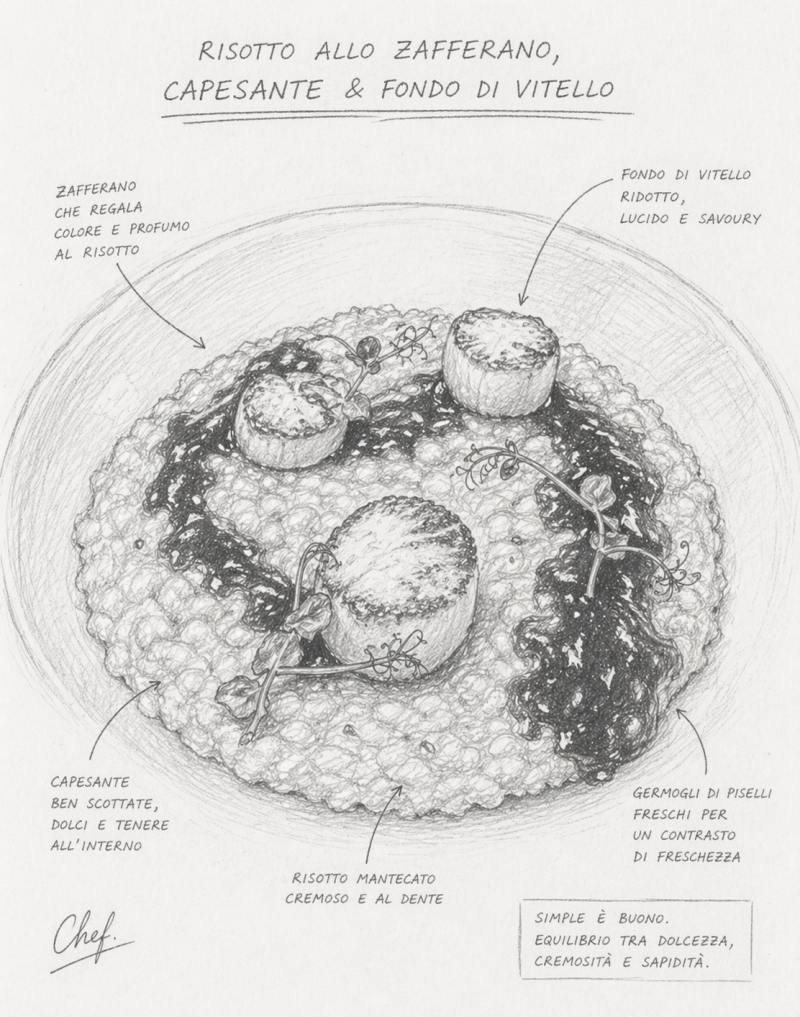
Saffron Risotto; Scallops & Veal Jus Reduction

A sophisticated play on contrasts. The golden warmth of Saffron meets the delicate sweetness of seared Scallops, tied together by the deep, savory intensity of a 24-hour Veal Jus. This dish is an evolution of Italian tradition, reimagined for the modern palate.

Ingredients (Serves 4)
• For the Risotto:
• 320g Acquerello or Carnaroli Rice
• 1.5L Light Vegetable Stock
• 1g Premium Saffron Threads (soaked in warm stock)
• 60g Cold Butter (cubed)
• 80g Parmigiano Reggiano 24-month (grated)
• 1 Shallot (finely minced)
• 100ml Dry White Wine (Vermentino or Chablis)
• The Sea:
• 12 Large King Scallops (Saint-Jacques)
• Guerande Sea Salt & White Pepper
• The Sauce:
• 100ml Veal Jus (reduced to a glossy glaze)
• Garnish:
• Micro-herbs or edible gold leaf (optional)

Method
1. The Veal Jus Reduction
Prepare or heat your veal jus in a small saucepan. Reduce it over low heat until it coats the back of a spoon. It must be dark, intense, and mirror-like. Keep it warm.
2. The Saffron Risotto
• Sauté: In a wide pan, sweat the minced shallot with a touch of butter until translucent.
• Toast: Add the rice and toast it for 2–3 minutes until the grains are hot to the touch. This "seals" the starch.
• Deglaze: Pour in the white wine and let it evaporate completely.
• Cook: Begin adding the simmering stock one ladle at a time, stirring constantly. Halfway through, add the saffron-infused liquid.
• Mantecatura: Once the rice is al dente, remove from heat. Vigorously stir in the cold butter and Parmigiano to create the famous "all'onda" (wavy) texture. Cover and rest for 2 minutes.
3. The Scallops
Pat the scallops bone-dry. Season with sea salt. In a scorching hot pan with a drop of neutral oil, sear the scallops for 90 seconds on one side until a golden-brown crust forms. Flip and kiss the heat for just 30 seconds more. The center must remain translucent and buttery.
4. Plating
• Spread a generous layer of the vibrant yellow risotto on a flat plate. Tap the bottom to level it.
• Place three scallops in the center.
• Drizzle the dark Veal Jus in a circular motion or in precise droplets around the scallops.
• Finish with a few saffron threads on top.
Perché questa ricetta spacca sul tuo sito:
1. Tecnica: Il "Veal Jus" è il segnale che sei un vero professionista.
2. Colori: Il giallo oro del riso contro il marrone scuro del fondo è esteticamente imbattibile.
3. Placement: Questa è la ricetta che un proprietario di villa vuole vedere quando cerca uno Chef per una cena di gala.

Saffron risotto topped with seared scallops and veal jus, a sophisticated fusion of land and sea.

Donodorato – Premium Extra Virgin Olive Oil from Puglia

€22.00

Liquid Gold from the heart of Puglia, Italy.

Sourced from centuries-old olive groves in the Apulia region, Donodorato is an exceptional Extra Virgin Olive Oil that embodies the soul of Italian tradition. Hand-harvested and cold-pressed within hours of collection, this oil preserves the highest level of polyphenols and authentic Mediterranean flavors.

See details
Linguine with Mazara del Vallo red prawns, an iconic Italian luxury seafood dish.

Red Prawn Linguine "Grand Cru"

Mazara del Vallo Prawns, Provence Gin Bisque & Lime Zest
This dish is the ultimate expression of Mediterranean luxury. The sweetness of the Sicilian Red Prawn is elevated by the botanical notes of Provence Gin, creating a sophisticated balance between sea and land.

Ingredients (Serves 2)
• Pasta: 200g Gragnano Linguine (or high-quality bronze-drawn pasta).
• Prawns: 12 Fresh Red Prawns from Mazara del Vallo (Gambero Rosso).
• Aromatics: 1 Shallot, a small bunch of fresh parsley, 1 organic Lime.
• The Kick: 40ml Premium Provence Gin.
• The Base: OlioDonodorato (Puglia EVOO), Ice-cold water, cherry tomatoes (optional).
• Seasoning: Fleur de sel, black pepper.

Method
1. The Prawn Preparation
Carefully clean the prawns. Separate the heads and shells from the meat.
• The Meat: Keep 4 prawns whole (raw) for the final topping. Chop the remaining meat into a coarse tartare, season with a drop of Olio Donodorato and a pinch of lime zest. Keep chilled.
• The Carapace: Keep the heads and shells for your bisque.
2. The Provence Gin Bisque
In a heavy-bottomed pan, heat a generous drizzle of OlioDonodorato. Sauté the chopped shallot and prawn shells over high heat, crushing the heads with a wooden spoon to release all the "coral" (the flavor engine).
• The Flambé: Pour in the Provence Gin and carefully flambé (or let the alcohol evaporate).
• The Infusion: Add a few ice cubes (the thermal shock extracts more color and flavor) and just enough water to cover. Simmer for 20 minutes, then blend and filter through a fine chinois or sieve. You should have a concentrated, bright orange nectar.
3. Cooking the Linguine
Boil the linguine in salted water. Drain them 3 minutes before the "al dente" time.
4. The Mantecatura
Finish cooking the pasta directly in the prawn bisque, adding a ladle of pasta water if needed. Stir vigorously to create a creamy emulsion. Turn off the heat and add a final touch of OlioDonodorato and fresh lime zest.
Plating
Place a nest of linguine in a deep plate. Top with the prawn tartare and the whole raw prawns. Finish with an extra grating of lime zest and a drizzle of oil.

Chef’s Note

The secret here is the Gin. It cuts through the richness of the prawn fat, leaving a clean, floral scent that reminds me of the Provence summers. Always serve with a chilled glass of Rosé from Saint-Tropez.

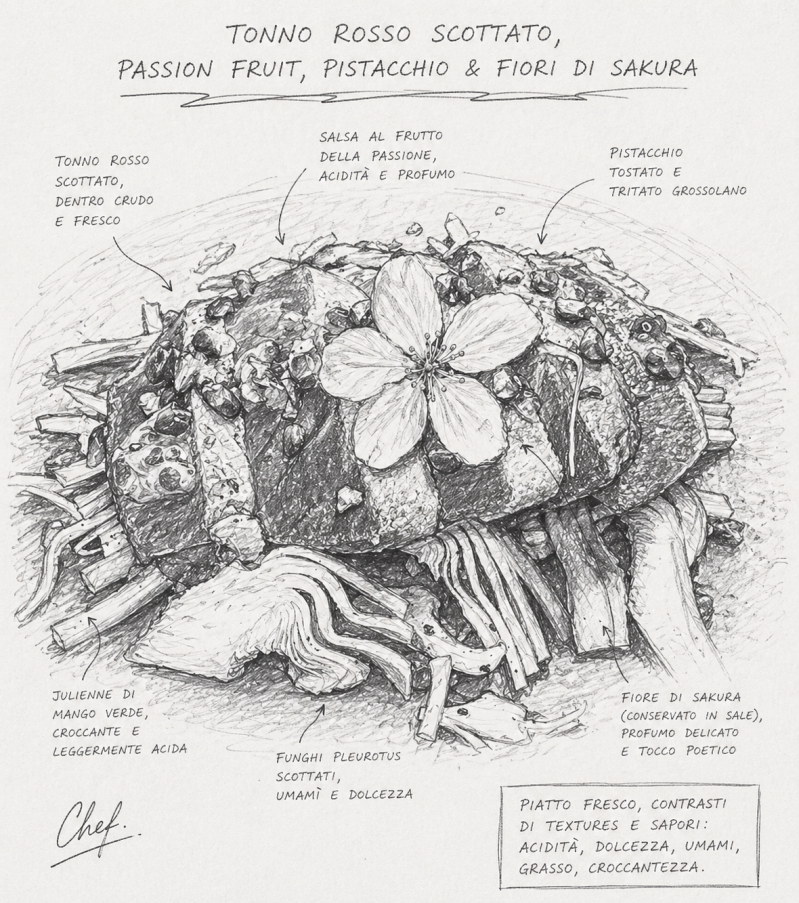
Honey-Soy Marinated Tuna Tataki

With Water-Poached Finish, Shaved Artichokes, Pistachios, and Passion Fruit
This recipe uses the Yubiki technique—briefly poaching the tuna in boiling water—to achieve a velvet-like texture that a hot pan simply can't replicate.

Ingredients
For the Tuna:
• 300g Fresh Tuna Loin (sushi-grade)
• 60ml Soy Sauce
• 1 tbsp Honey (Acacia or Wildflower)
• 1 tsp Fresh Ginger, grated
For the Salad & Toppings:
• 2 Fresh Artichokes (cleaned and thinly shaved)
• 2 Passion Fruits
• 30g Toasted Pistachios (roughly chopped)
• 1/2 Lemon (for the artichokes)
• Extra Virgin Olive Oil, salt, and pepper
• Edible flowers (for garnish)

Instructions
1. The Marination
In a shallow bowl, whisk together the soy sauce, honey, and grated ginger. Submerge the tuna loin in the marinade. Cover and refrigerate for 30 to 45 minutes, turning once to ensure even flavor absorption.
2. The "Hot Water" Searing (Yubiki Technique)
1. Prepare a pot of boiling water and a separate bowl filled with ice and water.
2. Remove the tuna from the marinade (keep the liquid!).
3. Carefully dip the tuna into the boiling water for 15–20 seconds. The outside will turn pale, while the inside remains ruby red.
4. Immediately plunge the tuna into the ice bath to stop the cooking process.
5. Pat thoroughly dry with paper towels.
3. The Reductions & Prep
• The Sauce: Pour the leftover marinade into a small saucepan. Simmer over medium heat until it reduces into a thick, glossy glaze.
• The Artichokes: Shave the artichokes paper-thin. Toss them immediately with lemon juice, olive oil, and a pinch of salt to prevent oxidation.
• The Pistachios: Toast the chopped pistachios in a dry pan for 30 seconds until fragrant.
4. Plating
1. Foundation: Arrange the shaved artichokes in the center of the plate.
2. The Tuna: Slice the tuna into 1cm thick medallions. You will see a beautiful contrast between the white "cooked" rim and the raw heart. Place them over the artichokes.
3. The Fusion: Drizzle the honey-soy reduction over the fish. Spoon the fresh passion fruit (seeds and pulp) across the plate. The sharp acidity is the key to balancing the fatty tuna.
4. The Crunch: Sprinkle the toasted pistachios generously for texture.
5. Finishing Touch: Place a white edible flower in the center as seen in your photo.

Chef's Tip for your Blog:

Explain to your readers that the Passion Fruit isn't just for decoration—its tropical acidity replaces traditional vinegar or lemon, cutting through the richness of the soy-honey glaze for a perfectly balanced bite.

Seared tuna tataki with passion fruit and pistachio crumble, signature Mediterranean-fusion dish.
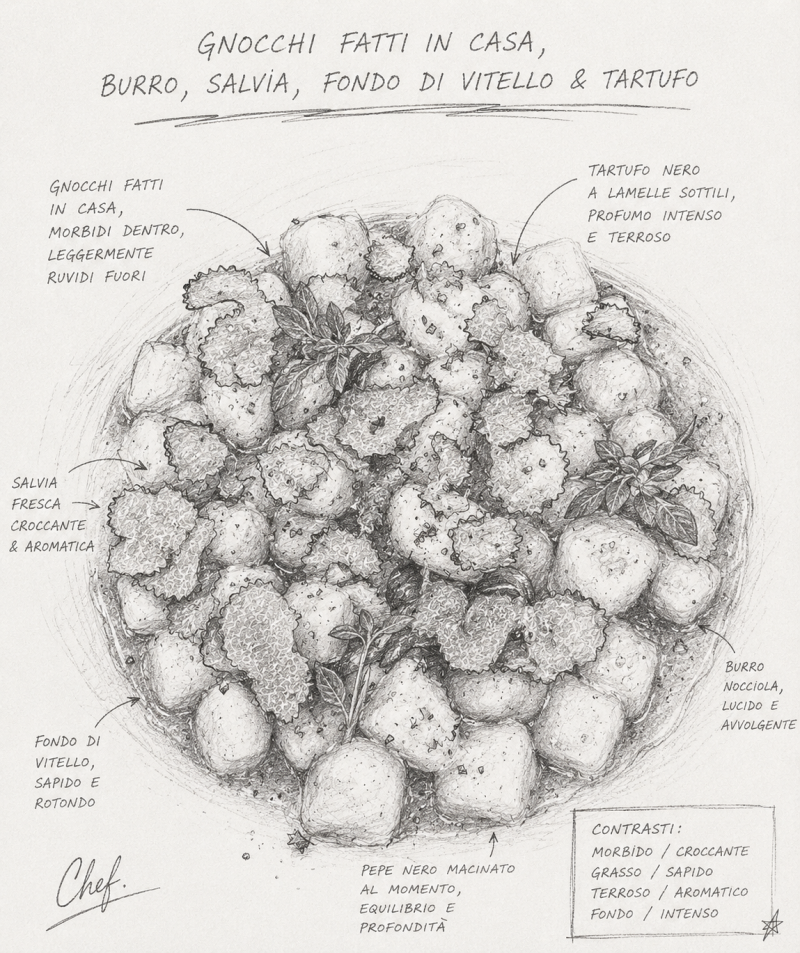
Handmade potato gnocchi with fresh black truffle shavings, fine dining Italian cuisine by Chef Daniele Negri.

Hand-Crafted Truffle Gnocchi

With Veal Jus, Sage Brown Butter & Olio Donodorato
A masterpiece of comfort and luxury. Light, pillow-soft potato gnocchi meet the deep, earthy richness of fresh black truffle and a silky veal reduction. A dish that embodies the essence of Italian tradition elevated for the most discerning palates

Ingredients
For the Gnocchi (Hand-made):
• Potatoes: 1kg (Old, starchy potatoes are best)
• Flour: 150g (Type 00)
• Egg: 1 fresh egg
• Salt: A pinch
For the Sauce & Finishing:
• Butter: High-quality unsalted butter
• Sage: Fresh leaves
• Truffle Cream (Tartufata): 2 tablespoons
• Veal Jus (Fondo di vitello): For a deep, umami base
• Olio Donodorato: Truffle-infused Extra Virgin Olive Oil
• Fresh Truffle: To be shaved at the table

Method
1. The Perfect Gnocchi Base
Boil the potatoes in their skins to keep them dry. Once tender, peel and mash them while still hot. On a floured surface, combine the potato mash with the egg and flour. Knead gently and quickly—the secret to light gnocchi is not overworking the dough. Shape into long ropes and cut into small, uniform pillows.
2. The Umami Infusion
In a large pan, melt the butter until it starts to foam. Add the fresh sage leaves and let them crisp up, infusing the butter with their aroma. Stir in the truffle cream (tartufata) and the veal jus. Let the sauce reduce slightly until it becomes glossy and rich.

3. Combining the Elements
Cook the gnocchi in salted boiling water. As soon as they float to the surface, transfer them directly into the pan with the truffle and veal reduction. Toss gently, adding a splash of pasta water if needed to create a perfect emulsion that coats every gnocco.
4. The "Grand Cru" Finish
Plate the gnocchi in a warm shallow bowl (as seen in your photo). Drizzle generously with Olio Donodorato (Truffle Edition) to amplify the earthy notes.
5. The Final Touch
Finish the dish by grating/shaving fresh truffle directly over the plate. The heat from the gnocchi will release the truffle's volatile aromas, creating an unforgettable sensory experience.

Chef’s Note

The key to this dish is the contrast between the delicate potato dough and the intensity of the veal jus. Using Olio Donodorato at the very end ensures the truffle scent remains sharp and luxurious until the last bite.

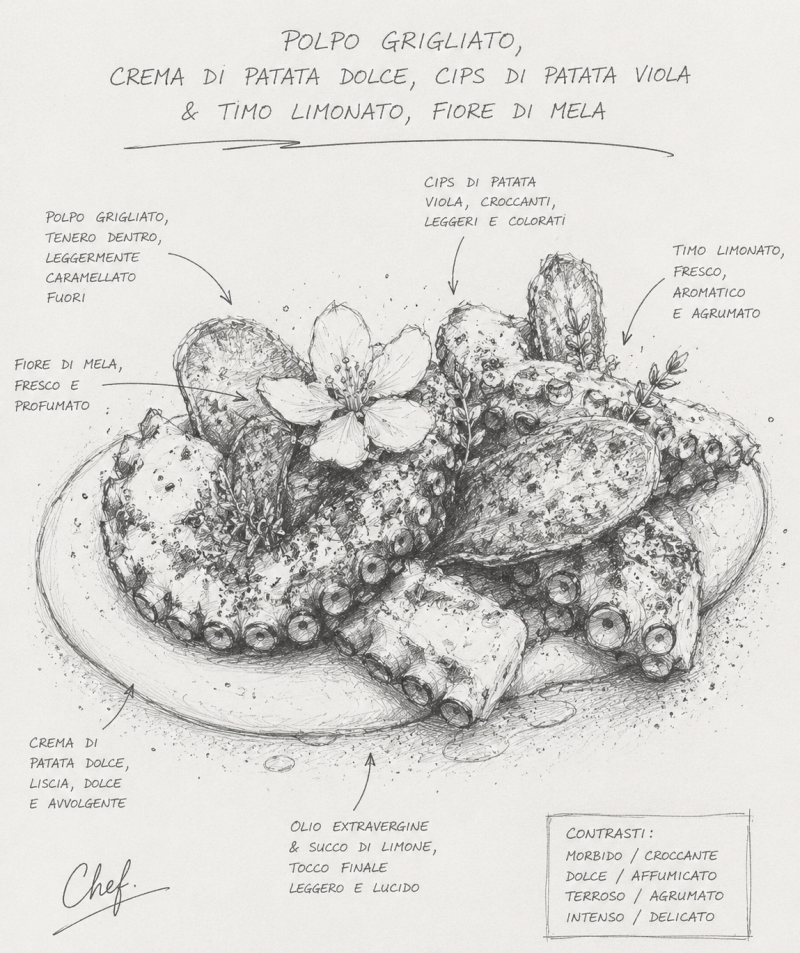
Grilled Octopus: A Symphony of Colors and Textures

Experience the perfect balance of Mediterranean tradition and contemporary gourmet art. This signature dish brings together the smoky intensity of grilled octopus with the natural sweetness of potatoes and the aromatic freshness of lemon thyme.

Ingredients (Per Portion)
• Octopus: 200g Mediterranean octopus (pre-cooked/tenderized).
• Sweet Potato Purée: 80g roasted sweet potatoes, 10g unsalted butter, a pinch of sea salt.
• Purple Potato Chips: 20g thinly sliced purple potatoes.
• Frying Oil: 100ml (for the chips).
• Aromatics: 2-3 sprigs of fresh Lemon Thyme, 1 Apple Blossom.
• Seasoning: 10ml Extra Virgin Olive Oil, 2g Smoked Paprika, 5ml fresh lemon juice

The Culinary Process
1. The Octopus Mastery (200g)
• Slow-cook the octopus in its own juices until tender.
• Finish on a high-heat grill for 2-3 minutes to achieve a caramelized exterior while maintaining a succulent 180g-190g final serving weight.
2. The Silky Base (80g)
• Roast the sweet potatoes at 180°C to concentrate the sugars.
• Blend with 10g of butter into a velvety purée for a sweet, warm counterpoint to the savory seafood.

3. Textural Layers (20g)
• Slice the purple potatoes to a thickness of 1mm.
• Flash-fry at 170°C until crisp. These add an earthy depth and a striking visual element.
4. The Grand Finale
• Plate the grilled octopus over the 80g of purée.
• Adorn with the purple chips, lemon thyme, and the blossom.
• Finish with a 10ml drizzle of lemon-infused olive oil and a dusting of paprika.

Chef’s Note for KOSTCHEF

"Precision in weight is the secret to consistent excellence. By following these 200g/80g/20g proportions, you ensure that every client in Saint-Tropez experiences the exact same 'Grand Cru' balance, while protecting your margins."

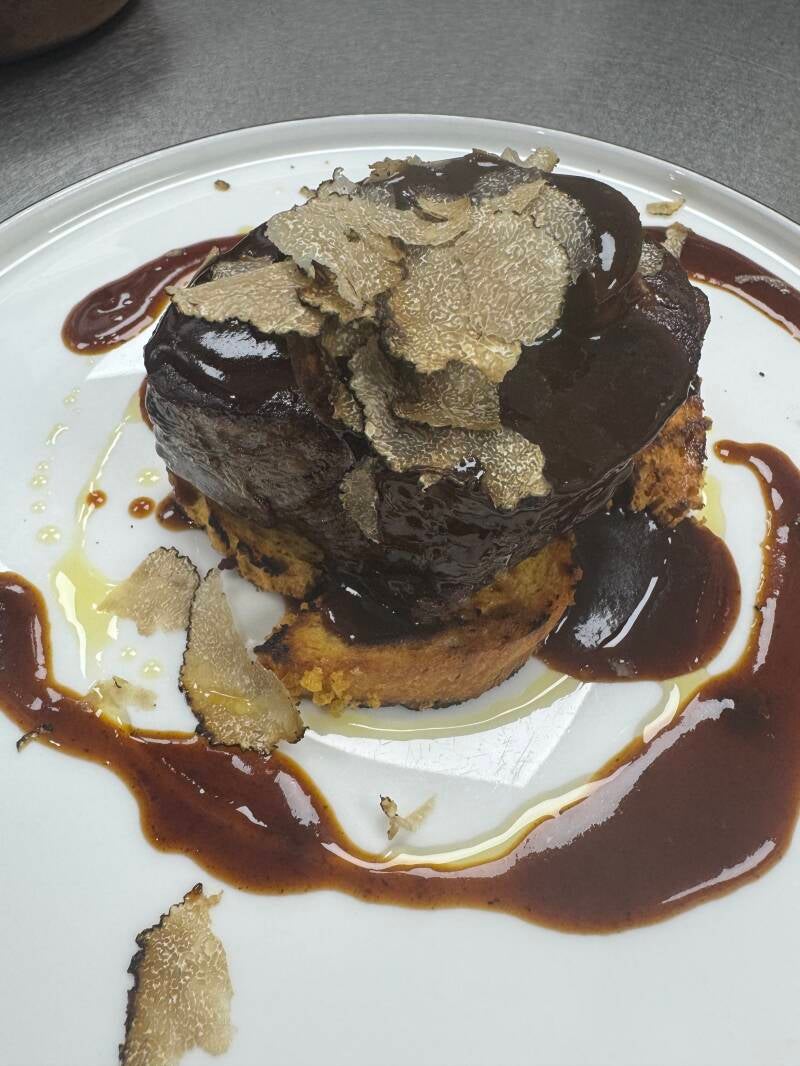
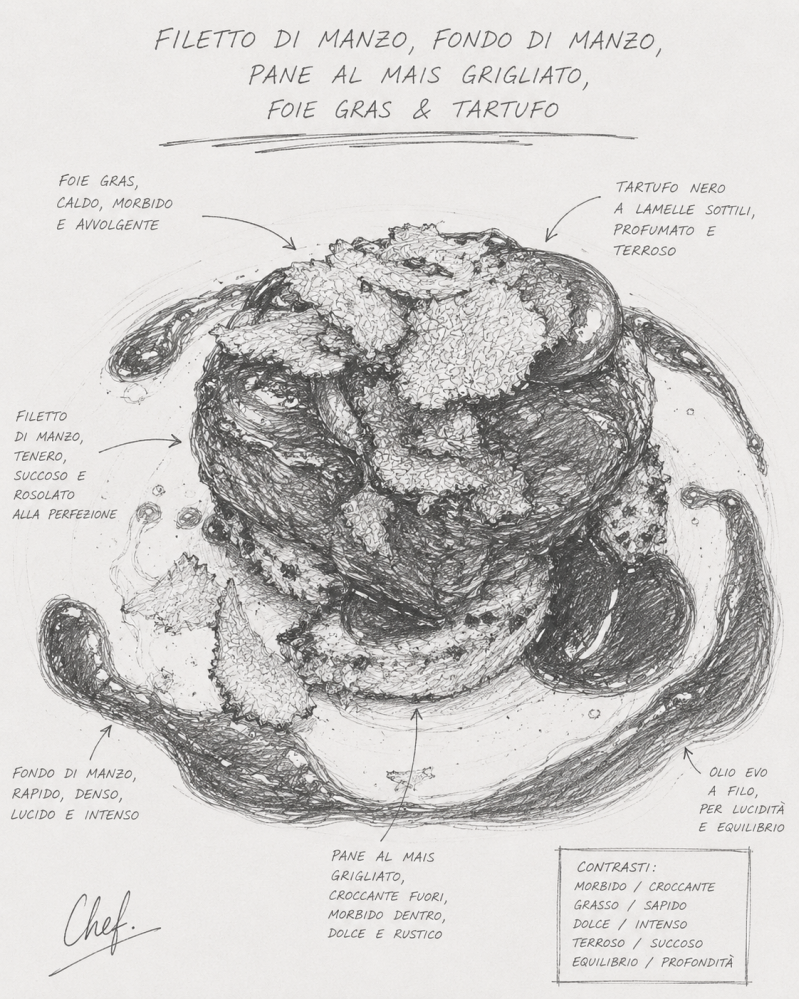
Classic Tournedos Rossini beef fillet with foie gras and truffle, high-end French cuisine for private events.

Beef Filet Rossini: The Pinnacle of Gourmet Heritage

A masterpiece of French haute cuisine, reinterpreted with contemporary precision. This dish represents the ultimate indulgence, combining the tenderness of premium beef with the richness of foie gras and the earthy aroma of black truffle.

Technical Ingredients (Per Portion)
• Beef Filet: 200g of center-cut beef tenderloin (Saignant).
• Foie Gras: 50g slice of fresh duck foie gras.
• Black Truffle: 10g of fresh black truffle shavings.
• Maize Bread: 1 thick slice of grilled corn bread for a crunchy, rustic base.
• Beef Jus: 40ml of rich, glossy, and reduced bone marrow jus.
• Seasoning: Fleur de sel, cracked black pepper, and premium olive oil.

The Culinary Engineering
1. The Foundation: Grilled Maize Bread
Toast a thick slice of maize bread until it achieves a perfect golden crunch. This provides the structural integrity and a sweet, toasted contrast to the savory elements above.
2. The Core: The Filet (200g)
Pan-sear the 200g beef filet to a perfect "Saignant" (medium-rare) state. The goal is a deeply caramelized crust with a succulent, warm-red center. Rest the meat to allow the juices to redistribute.
3. The Luxury: Pan-Seared Foie Gras (50g)
Quickly sear the foie gras in a scorching hot pan until "chaud et moelleux" (warm and soft). The exterior should be crisp and golden, while the interior remains buttery and melting.
4. The Grand Assembly
Place the filet atop the grilled maize bread. Crown the beef with the seared foie gras and finish with 10g of freshly shaved black truffle.
5. The Final Gloss: Rich Beef Jus
Drizzle the 40ml of reduced beef jus around the plate. The sauce must be "riche et brillant" (rich and shiny), binding all the elements together with its deep, umami intensity.

Chef’s Note

"Excellence in the kitchen is a balance of artistic vision and technical precision. Every element, from the texture of the maize bread to the internal temperature of the filet, is designed to create a harmonious and unforgettable gastronomic experience."

Step-by-step culinary step sketch for cooking luxury lobster paccheri pasta, fine dining signature recipe guide by personal chef.

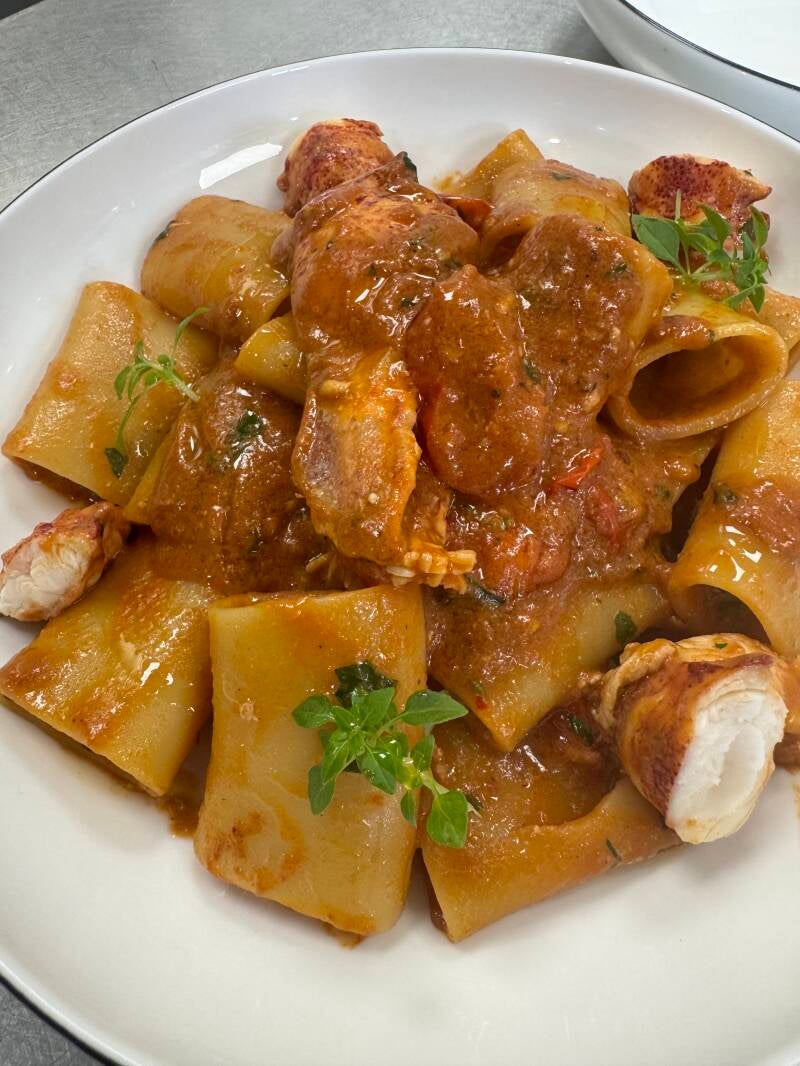
Artisanal Paccheri with Blue Lobster & Intense Bisque

A masterclass in Mediterranean seafood fine dining, balancing the rich intensity of a concentrated lobster bisque with the fresh sweetness of Pachino tomatoes.

Ingredients

For the Main Dish:

• 400g Artisanal Paccheri (Gragnano, bronze-die extruded)

• 2 Fresh Blue Lobsters (approx. 600g-700g each)

• 250g Pachino Tomatoes (halved)

• 2 cloves Garlic (crushed)

• 1 Fresh Red Chili (seeded and finely sliced)

• 50ml Premium Extra Virgin Olive Oil

• 50ml Dry White Wine (for deglazing)

• Fresh Microgreens (basil sprouts or micro-chervil) for garnishing

• Sea Salt

For the Concentrated Bisque (Fumet):

• Carapaces, heads, and claws from the lobsters

• 1 Small White Onion (coarsely chopped)

• 1 Carrot (coarsely chopped)

• 1 Celery Stalk (coarsely chopped)

• 1 tbsp Tomato Paste (Concentrato di pomodoro)

• 40ml Brandy or Cognac (for flambé)

• Ice cubes or ice-cold water

• Fresh parsley stalks & black peppercorns

Method

1. Lobster Preparation

• Separate the lobster heads from the tails. Carefully remove the tail meat from the shell and cut it into clean, bite-sized medallions.

• Crack the claws open to extract the meat whole. Keep the meat refrigerated until ready to cook.

• Save all the empty shells (carapaces), heads, and internal juices for the bisque. Chop the heads into smaller pieces to release maximum flavor.

2. The Signature Concentrated Bisque

• Heat a splash of olive oil in a deep pot over high heat. Add the lobster shells, heads, and claws, crushing them firmly with a wooden spoon to extract the juices. Tosta thoroughly until caramelized and intensely fragrant.

• Add the onion, carrot, and celery, cooking for another 3 minutes. Stir in the tomato paste.

• Pour in the Brandy and flambe to burn off the alcohol, scraping all the fond from the bottom of the pot. Deglaze with white wine and let it reduce completely.

• Cover the ingredients with ice cubes or ice-cold water (the thermal shock extracts the collagen and proteins better). Bring to a gentle simmer and let it reduce for about 35–40 minutes, skimming any impurities from the surface.

• Strain through a fine-mesh conical sieve (chinois), pressing down hard on the shells to extract every drop of liquid. Reduce the strained bisque further until it becomes smooth, velvety, and deeply glossy.

3. The Seafood Base

• In a large, wide skillet, heat the extra virgin olive oil with the crushed garlic and sliced chili. Once fragrant, add the halved Pachino tomatoes. Season with a pinch of salt and sauté over high heat for 3-4 minutes until they begin to soften and release their sugars.

• Pour a ladle of the concentrated lobster bisque into the skillet to create a rich emulsified base. Remove the garlic.

4. Cooking the Pasta

• Bring a large pot of salted water to a rolling boil. Drop the paccheri and cook them until they are exceptionally al dente (roughly 3–4 minutes before the package directions), as they will finish cooking directly in the sauce.

5. Final Emulsion & Plating

• Transfer the paccheri directly into the skillet with the tomatoes and bisque. Toss vigorously over medium-high heat, adding more bisque as needed, allowing the starch from the pasta to emulsify with the oil and seafood reduction.

The Lobster Meat: In the final 60–90 seconds of tossing, add the raw lobster medallions and claw meat to the skillet. They must gently poach in the residual heat of the sauce to remain incredibly tender and juicy.

• Plate the glossy paccheri, dynamic and high, stacking the vibrant lobster chunks on top. Finish with a drizzle of premium raw extra virgin olive oil and garnish elegantly with fresh microgreens.
Chef’s Notes

The Thermal Shock Secret: When building the bisque, always use ice-cold water or pure ice cubes over the hot, caramelized shells. This extreme temperature differential causes a thermal shock that rapidly extracts the collagen, soluble proteins, and intense deep sea flavors from the lobster carapaces, resulting in an incredibly velvety and full-bodied reduction.

Gourmet artisanal paccheri pasta coated in rich lobster bisque, topped with fresh blue lobster medallions and Pachino tomatoes, luxury private chef fine dining experience.